

Nobody has agreed yet

When you are still arguing after seeing plenty of places

This page is for the point where the group has already looked at options and keeps landing back where it started. Maybe the names came off this site. Maybe they came off a map, or out of somebody's memory of a good night. It makes no difference now: a handful keep resurfacing, none of them has been agreed, and the thread is going round again.

Being stuck here is ordinary. It is what happens when a group of adults each hold a slightly different picture of the evening, and nobody wants to be the one who overrules the rest. Nothing has gone wrong, and nobody in the chat is being difficult on purpose.

What has gone wrong is the target. Somewhere in the last stretch of the thread the question quietly changed from where can we all eat tonight into which restaurant is the best one, and the second question has no answer a group can reach together.

So lower it, deliberately. From here the job is one workable plan that every person invited can walk into without dreading it. Not the perfect evening. A plan.

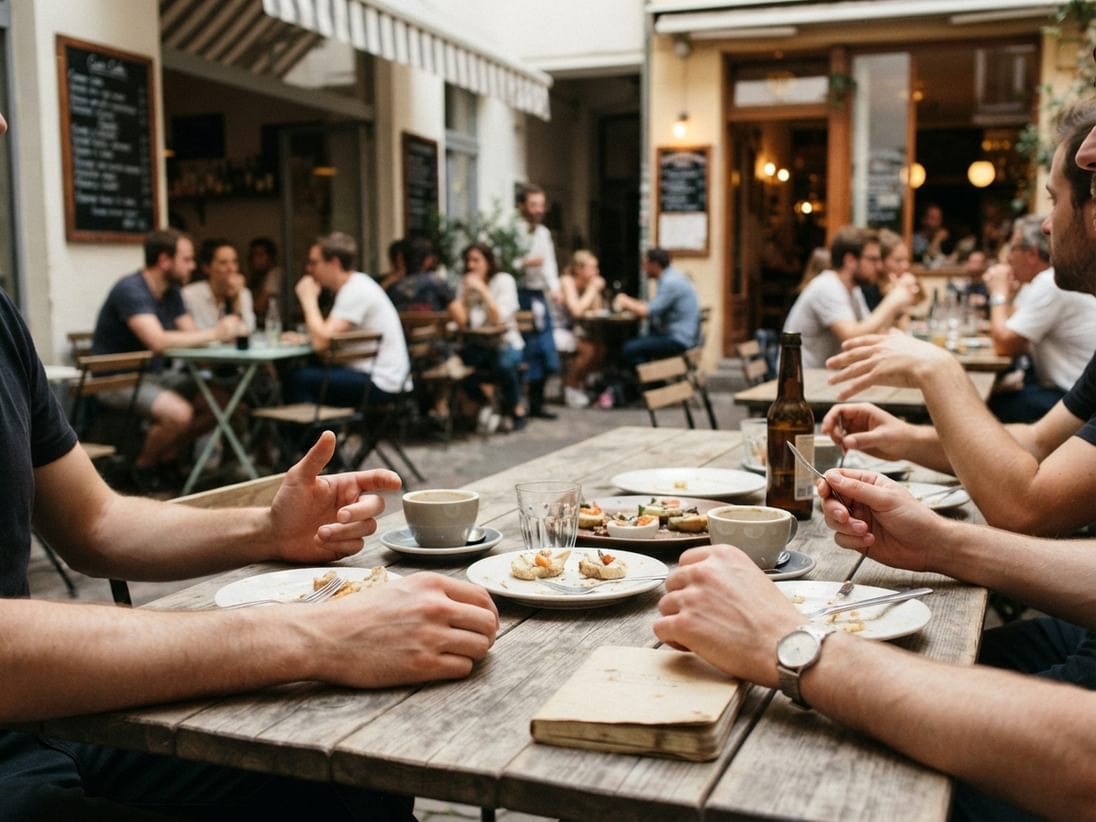
Several pairs of hands resting around a shared table part way through a conversation
Everyone at this table wants roughly the same thing. They are describing it differently.
What a good result looks like from here

One place named, one held in reserve, and a group that turns up. That is the whole target tonight. A choice nobody regrets is worth far more than a choice somebody would have called flawless.

Out of the chat, onto the page

List the few places that keep getting mentioned

Write down two to four restaurant names: the ones that keep coming back no matter how many times the conversation restarts. It does not matter whether they came off this site, off a map, or out of something a colleague said last month. If a name has survived this long, it goes on the list.

  • It is the easiest one to get to. Nobody has to plan an expedition, and the person coming from furthest away can still be there without leaving early.
  • Everyone understands the menu. No one has to ask what half of it means, and the fussiest person at the table can order without a negotiation.
  • Somebody in the group actually wants it. One person lit up when it was suggested. That is a real reason, and it is the one people are usually too polite to write down.

Spelling does not matter and neither does where they came from. What matters is that the list stops growing once you have written it.

From this point the list is closed. Every new name somebody drops in restarts the clock, and a group that keeps restarting the clock ends up eating whatever is still open on the way home.

Why you are split

Spell out what each option gives you and what it costs you

Groups rarely disagree about restaurants. They disagree about which tension they are willing to lose. Comfort against novelty. A shorter journey against a better room. Eating properly against nobody having to think about the bill. Until those are written down, the argument has nothing solid to be about.

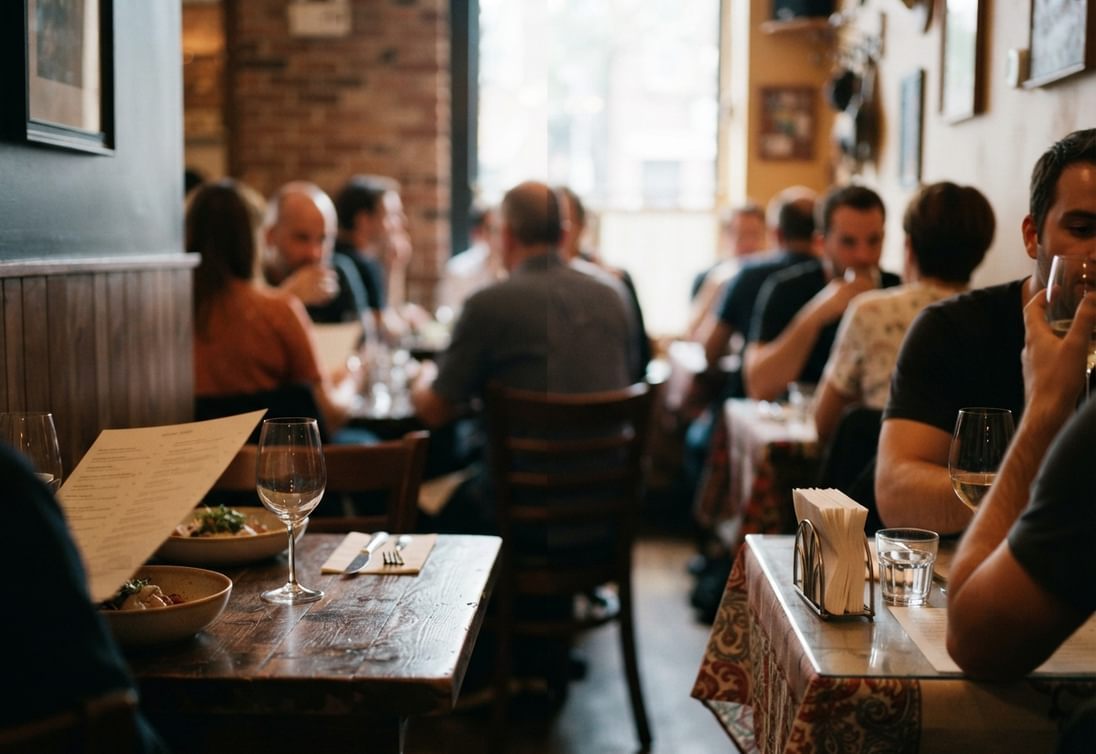
A narrow dining room filling up quickly with tables set close together
The room that feels alive to one person is the room another one cannot hear in.

Read those pairs again and you can usually name, in a line each, why your group has split. Whoever suggested the far side of town is buying atmosphere and paying for it in travel. Whoever is holding out for the familiar place is buying certainty and paying for it in surprise. Neither of them is wrong, and neither will convince the other by saying it again louder.

So stop trading opinions and start trading costs. Take every name still standing and answer the same three questions about it, in the same order, one contender at a time. It is a couple of minutes of work and it turns a mood into something two people can actually compare.

  • How hard is this for the person with the least left in them? Somebody is coming straight off a long day, or with a child, or from the far end of the line. Measure the journey from where that person is standing, not from where you are.
  • Whose taste does the menu really serve? Read it once as the fussiest eater coming and once as the hungriest. If either of them would go home unsatisfied, that is a genuine cost and not a detail to be smoothed over.
  • Which one is closest to the night people imagined? Somebody suggested going out for a reason: loud and celebratory, or slow and catching up. The contender that matches that picture is carrying the evening. The rest are just dinner.
Send the answers back, not your verdict

Paste the three answers for each contender into the chat and let people read them cold. An argument about which place is better goes nowhere, because nobody can be shown to be wrong. An argument about a longer walk against a quieter room finishes, because both of those are things a person can decide to accept.

The deciding stops here

Choose a main plan and a backup and stop reopening the search

Two names leave this page. Everything else that was ever mentioned is out, including the one you privately liked and never quite argued for.

  • The main plan breaks the fewest hard rules. Hard rules are time and access: who can reach it, by when, and whether they can get through the door once they are there. It does not have to be the most exciting name on your list. It has to be the one nobody has a real reason to refuse.
  • The backup leans the other way on purpose. Take the contender that gives the evening more of a lift, even though it asks a little more of everyone. If the first is full, shut or flatly refused, you want a second answer ready rather than a second search.
  • Every other name is closed now. Do not keep them warm and do not go back for a fresh look. Reopening the field is exactly what put this group where it is, and it will do it again if you let it.

Put both of them in one message so nobody has to work out which is which. Name the main plan, name what you are giving up by taking it, name the backup behind it, and set the point after which silence counts as agreement.

Then hold the line. A veto reopens the question only when somebody names a real problem: they cannot get there, they cannot eat there, they cannot afford it. A preference is not a problem, and this is the round where preferences stop counting.

One message, not another poll

"Plan is the first one. It is the easiest for everyone to reach, and yes, that means the quieter room loses. If they cannot take us I will book the second and say so here. Unless somebody flags a real problem, that is where we are eating."

Once it is booked, put your attention on the people coming rather than on the name you did not choose. Nobody at that table will spend the evening wondering whether another kitchen would have been marginally better. They will remember that the night happened at all.

For the next one

Next time, start with a tighter path into options

Nothing you did tonight was wasted, but you would rather not need this page again. The way to avoid it is to cut the field down before anybody gets attached to a name. Each route below narrows things early, and each one starts from a different corner of the same problem.

Two people stepping through an open doorway into a busy evening room

When the clock is the problem

Say what tonight has to work around

Describe the evening in a few plain terms and read a short set of places built around them. It ends where this page ended, with one plan and one backup, but it gets there before anyone has dug in.

When the night has a job to do

Let the occasion set the rules

A send off, a first meeting, a birthday somebody will remember being at. Naming the occasion first rules out most of the options before a single restaurant has been mentioned.

When the plan is genuinely odd

Hand over the awkward part

A toddler, a late train, one person who eats almost nothing. When no route here covers it, write the constraint down once and get a straight answer back.

Every one of them finishes the way this page just did: with a name, not a longer list. That is the only thing this site is trying to hand you.